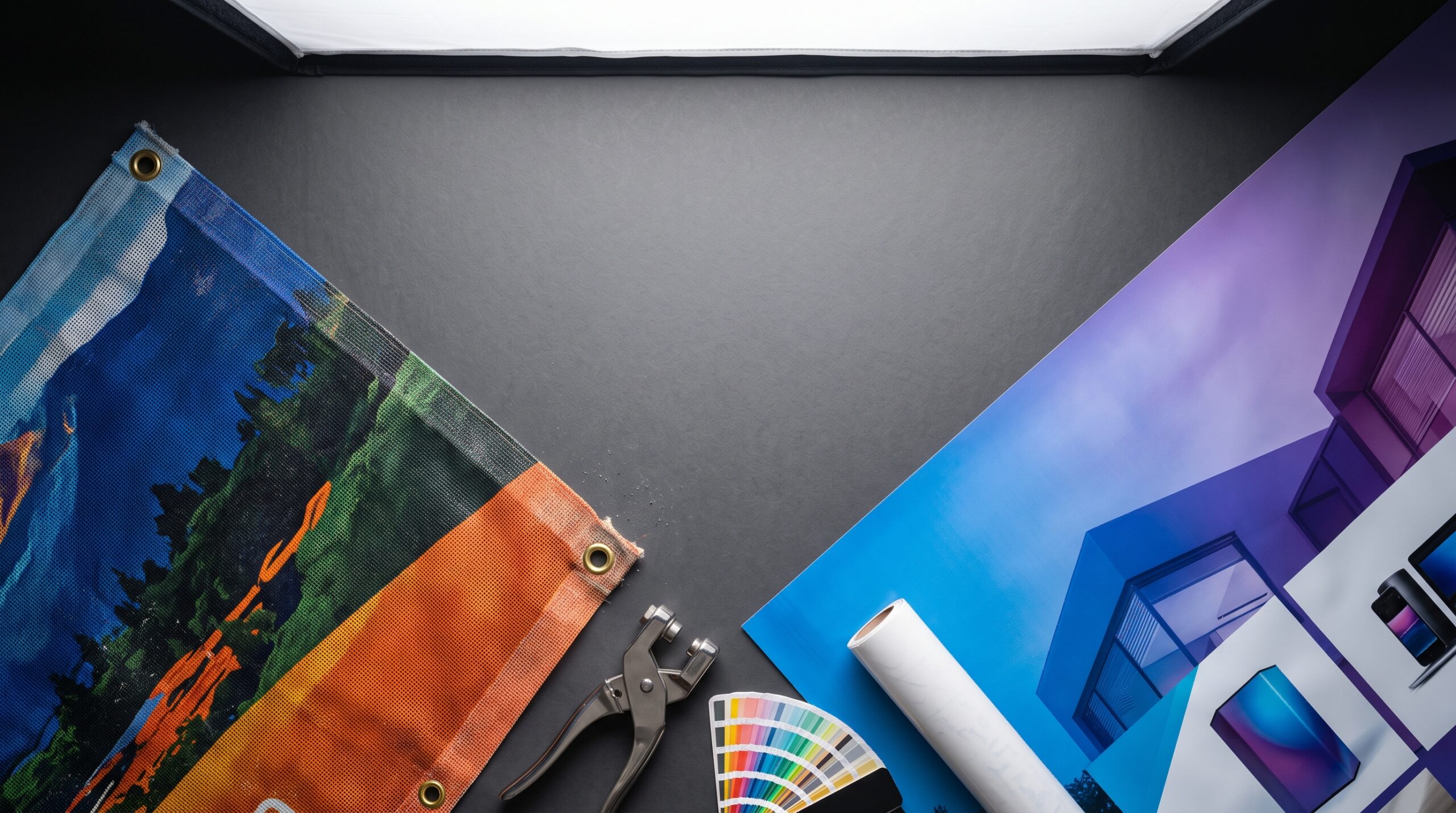
Choosing between indoor and outdoor banner printing in Irvine comes down to one question: how long does the banner need to survive the conditions you’re putting it in? Outdoor banners face sun, wind, and moisture. Indoor banners face lighting, close viewing, and sometimes nothing harsher than a conference room. The material, ink, and finishing you pick should match the environment, not just the design. Here’s what to consider before you order.
Material Differences: Vinyl, Mesh, and Fabric
The substrate is the first real decision. Outdoor banners in Irvine almost always use vinyl or mesh. Vinyl is the standard for most outdoor signage because it’s waterproof, tear-resistant, and holds color well under UV exposure. Mesh is a perforated vinyl that lets wind pass through, which makes it the right choice for large installations, fence wraps, or any banner that spans a wide open area where wind could catch it.
Indoor banners give you more options. Vinyl still works, but fabric banners have become popular for indoor events and trade shows because they look more polished, don’t reflect light harshly, and can be sewn with pockets for easy mounting. Fabric also wrinkles less during transport and storage. If you’re setting up a banner for a one-day event, vinyl is fine. If you’re building a permanent lobby display, fabric or a rigid substrate like foam board will look better.
Weight and Handling
Outdoor banners need to be heavy enough to hang flat but light enough to install. A 13-ounce vinyl banner is the industry standard for most outdoor jobs. It’s thick enough to resist tearing at the grommets but manageable for two people to install. Mesh banners weigh less per square foot, which helps when you’re covering a large area. Indoor banners can be lighter, especially if you’re using fabric, because there’s no wind load to worry about.
Print Quality and Viewing Distance
Viewing distance changes the resolution requirements. An outdoor banner on a storefront or along a road is usually seen from 10 to 50 feet away. At that distance, a resolution of 720 dpi is plenty. The human eye can’t distinguish finer detail at that range. Indoor banners, particularly in lobbies or trade show booths, are often viewed from a few feet away. That’s when you want a higher resolution print, closer to 1440 dpi, and sharper typography.
Color accuracy matters more indoors. Fluorescent lighting and close inspection make color shifts obvious. If you’re printing a banner for a product launch or a corporate event, you want the colors to match your brand standards exactly. A UV flatbed printer, like the one used at Irvine Printing, can produce dense, accurate color on a variety of substrates, which is useful when you need a precise match.
Finishing Options That Matter
Finishing is where banners succeed or fail. Outdoor banners need reinforced hems and grommets every 18 to 24 inches. Without them, the banner will tear at the corners or pull loose in the wind. If you’re installing on a fence or a wall, you might want pole pockets instead of grommets. For indoor banners, hemming is less critical, but a clean edge makes the piece look professional. Fabric banners can be finished with a sewn hem and a rod pocket, which gives them a more finished look than a vinyl banner with exposed grommets.
Durability and Lifespan in Irvine’s Climate
Irvine’s weather is mild compared to most of the country, but outdoor banners still face real wear. The sun is the biggest factor. UV light breaks down ink and vinyl over time. A standard outdoor vinyl banner with solvent or UV-cured ink will hold its color for about two to three years in Southern California. If you need something that lasts longer, ask for a laminate or use a higher-grade vinyl. Lamination adds a protective layer that blocks UV rays and resists scratching.
Wind is the second factor. Irvine gets coastal breezes and occasional Santa Ana wind events. A banner that’s not properly grommeted or that’s too large for its mounting points will tear or pull loose. For large outdoor banners, mesh is the safer choice because it reduces wind load. If you’re mounting a banner on a chain-link fence or a construction site, mesh is almost always the right call.
Moisture is less of a concern in Irvine, but fog and marine layer can leave moisture on surfaces. Vinyl handles this fine. Paper or uncoated materials won’t. If you’re printing an outdoor banner that will be up for more than a few weeks, vinyl with a matte or gloss laminate is the safest route.
Cost Factors: What Drives the Price
Banner pricing in Irvine varies based on size, material, and finishing. A standard 3×6-foot vinyl banner with grommets typically runs between $80 and $150. A 4×8-foot banner is usually in the $150 to $250 range. Mesh runs slightly higher per square foot than solid vinyl because it’s a specialty material. Fabric banners are more expensive, often 20 to 40 percent more than vinyl, but they look better indoors and can be reused if you’re doing multiple events.
Setup and installation costs are separate. If you’re hanging a banner yourself, you need to factor in hardware like ropes, bungee cords, or zip ties. If you’re hiring a professional installation team, expect to pay an hourly rate or a flat fee based on the height and difficulty of the installation. A storefront banner at ground level is a quick job. A banner on a second-story facade requires a ladder or lift, which adds cost.
Indoor Banner Use Cases and Best Practices
Indoor banners serve a few common purposes in Irvine: trade show displays, event backdrops, retail signage, and office branding. For trade shows, fabric banners with a stand system are the most practical. They pack down small, set up in minutes, and look sharp under booth lighting. For event backdrops, a vinyl banner with a matte finish reduces glare and photographs well. For retail, you might want a more rigid display like foam board or acrylic, which reads as more premium than a flimsy vinyl banner.
One practical tip: if you’re printing a banner for a photo backdrop, avoid glossy finishes. Gloss reflects camera flashes and creates hot spots in photos. A matte or satin finish will look better in photos and under direct lighting.
Mounting Indoor Banners
Indoor mounting is simpler than outdoor, but it still requires planning. A banner with grommets can be hung with hooks or zip ties from a frame. A fabric banner with a rod pocket slides onto a tension rod or a display stand. For a permanent installation, you might use adhesive strips or a magnetic mounting system if the wall allows it. The key is to match the mounting method to the banner material. Heavy vinyl will pull down on weak adhesive. Light fabric won’t hold up under tension if you stretch it too tight.
Outdoor Banner Use Cases and Installation Tips
Outdoor banners in Irvine are used for storefront advertising, grand openings, construction site branding, community events, and directional signage. The most common mistake is underestimating wind load. A 4×8-foot banner is a large sail. If you mount it with only four grommets and light rope, it will fail. Use grommets every 18 inches at minimum, and reinforce the corners. If the banner is larger than 4×8 feet, consider wind slits or mesh material.
Another common mistake is poor placement. A banner mounted too high becomes unreadable. A banner mounted too low gets blocked by cars or pedestrians. For a storefront, the sweet spot is usually just above eye level, around 7 to 8 feet off the ground. For a street-facing banner, make sure it’s perpendicular to traffic or angled so drivers can read it without straining.
Grommets, Pole Pockets, and Wind Slits
Grommets are the standard mounting point for outdoor banners. They’re metal rings punched into the hem. Pole pockets are sewn channels that slide over a post or pipe. Wind slits are small cuts in the banner that let air pass through, reducing stress on the material. If you’re mounting a banner in a windy area, ask for wind slits. They don’t ruin the design if they’re placed strategically, and they can extend the life of the banner significantly.
Choosing the Right Printer in Irvine
Not all print shops handle indoor and outdoor jobs equally. Some specialize in large format outdoor work but produce mediocre indoor pieces. Others focus on fine art and small format prints but lack the equipment for a 10-foot banner. When you’re evaluating a print provider, ask about their equipment and their finishing capabilities. A shop with a flatbed UV printer can handle rigid materials like acrylic, wood, and foam board, which opens up options for indoor signage that a standard roll-to-roll printer can’t touch.
You should also ask about lamination and mounting services. A shop that offers on-site installation can save you a lot of hassle, especially for large outdoor banners or second-story signage. And if you need design help, a shop with in-house graphic designers can catch issues with resolution, color, or layout before you pay for a wasted print.
Frequently Asked Questions
How long do outdoor banners last in Irvine?
With UV-cured ink and a vinyl substrate, expect two to three years of outdoor life. Adding a laminate extends that by a year or more. Mesh banners last slightly less because they’re thinner, but they handle wind better.
Can I use an indoor banner outside?
Technically yes, but it won’t last. Indoor banners use lighter materials and inks that aren’t UV-stable. They’ll fade, warp, or tear within weeks. If there’s any chance the banner will be exposed to sun or moisture, print it on outdoor vinyl.
What size banner do I need for a storefront?
Measure the available mounting space and subtract six inches from each side for clearance. A standard storefront banner is 3×6 feet or 4×8 feet. If you’re mounting above a door, a 2×4-foot or 2×6-foot banner is usually enough. For a street-facing sign, bigger is better, but only if you can mount it securely.
Next Steps for Your Banner Project
Start by defining the environment, the viewing distance, and the lifespan you need. That will narrow your material and finishing choices immediately. Then get a quote from a local print shop that can show you samples of both indoor and outdoor work. Ask to see a finished banner with grommets and a laminated sample so you can feel the difference in weight and durability. The right choice depends on your specific use case, but the fundamentals are the same: match the material to the environment, reinforce for wind and sun, and print at a resolution that suits the viewing distance.
Visit Irvine Printing